New systems start in simulation or on the bench, move to MEP, and then reach MeadowHawk through short, staged flight tests. When something goes wrong, we record what happened and what changed.
Analytical design and major aircraft revisions
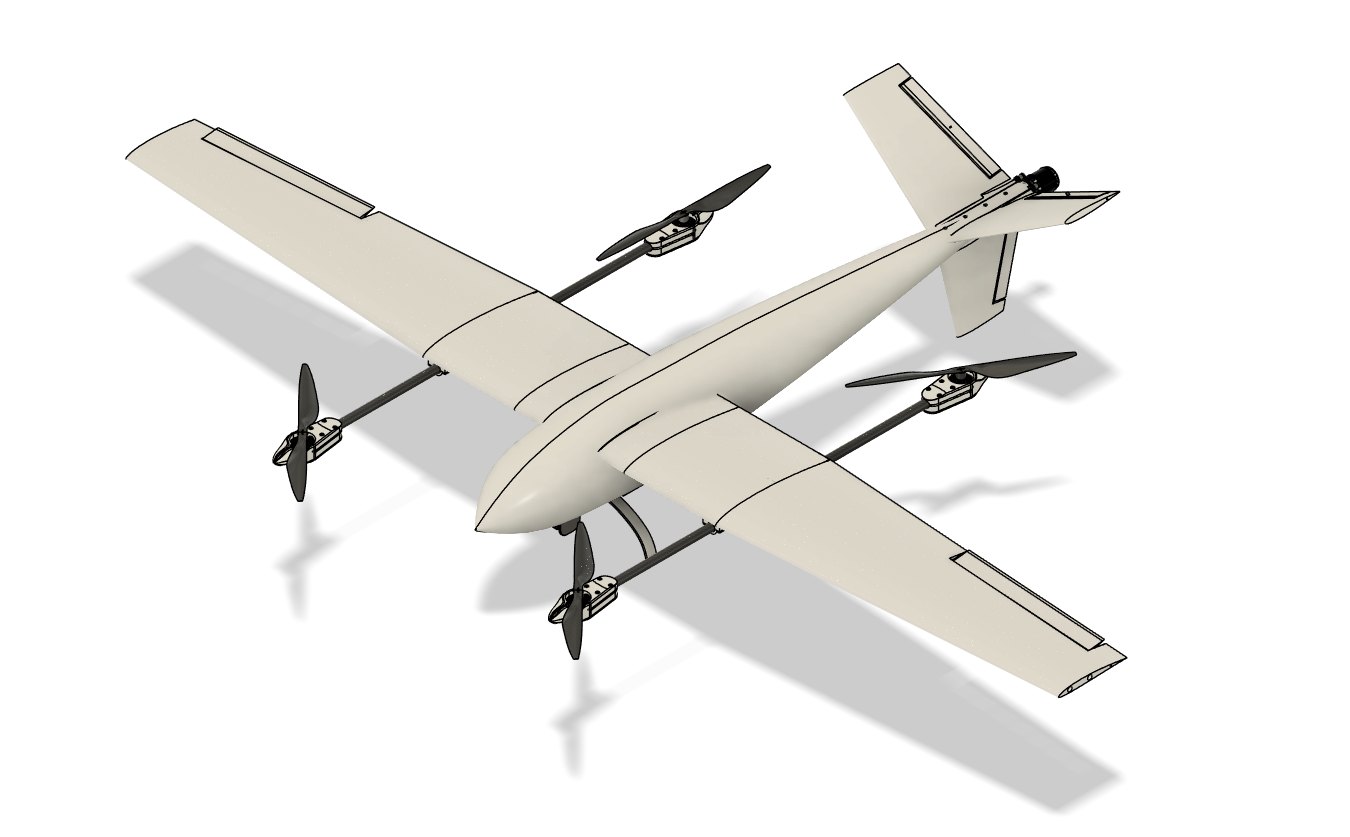
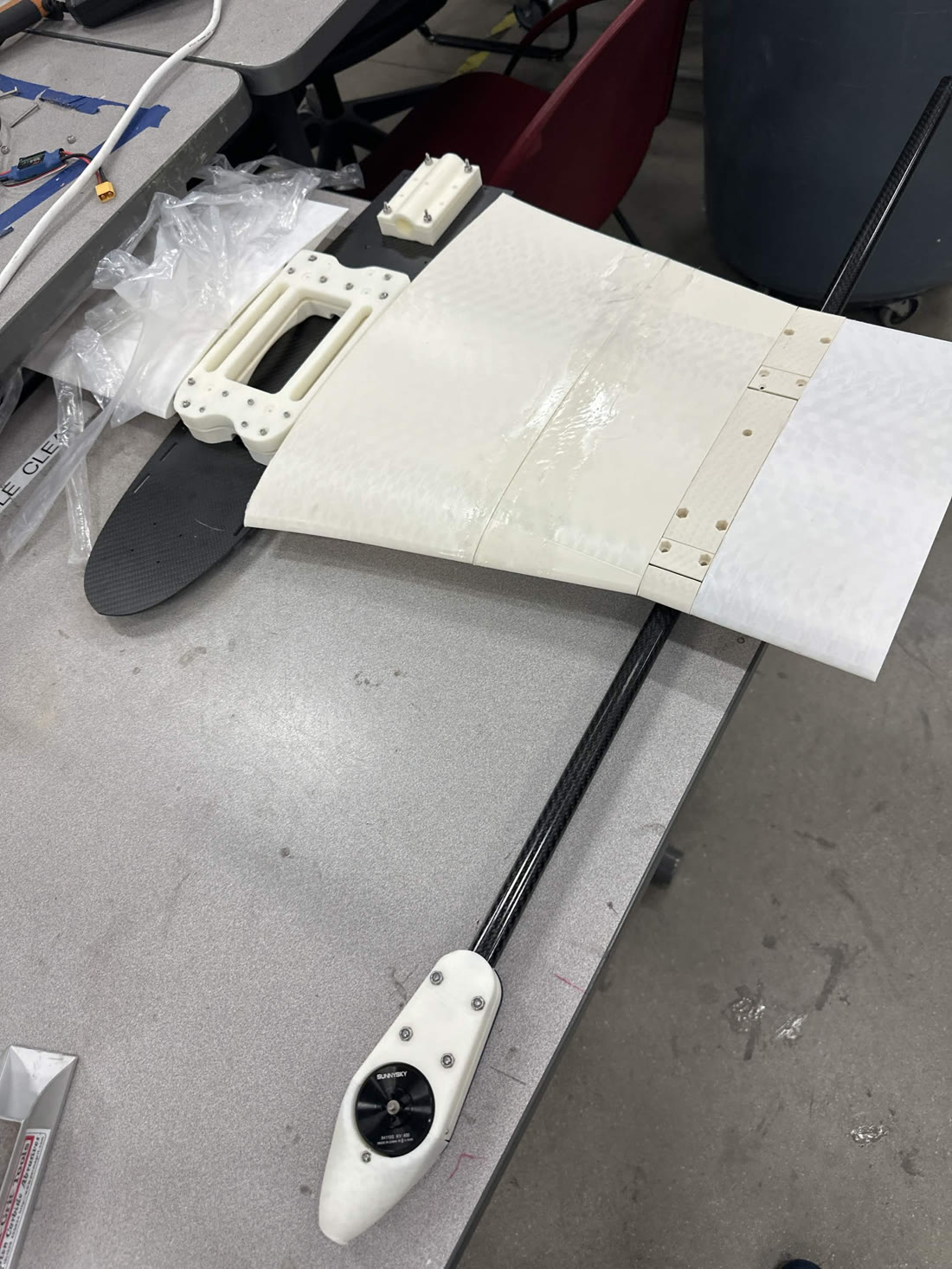
We began with estimates for wing loading, stall speed, drag, cruise thrust, hover power, and mission energy. CAD and eCalc helped us compare motors, propellers, batteries, mass, and geometry. The aircraft changed several times as real components replaced early estimates.
Design-stage CAD used to compare geometry and subsystem placement.
An early airframe assembly during component fit checks.
Multirotor Experiment Platform
Before MeadowHawk was ready, MEP carried the Pixhawk, Jetson, camera, communications hardware, and payload equipment. We used it for waypoint work, camera integration, competition-altitude image collection, and payload releases. These were MEP subsystem-development tests; MeadowHawk flight results are documented separately.
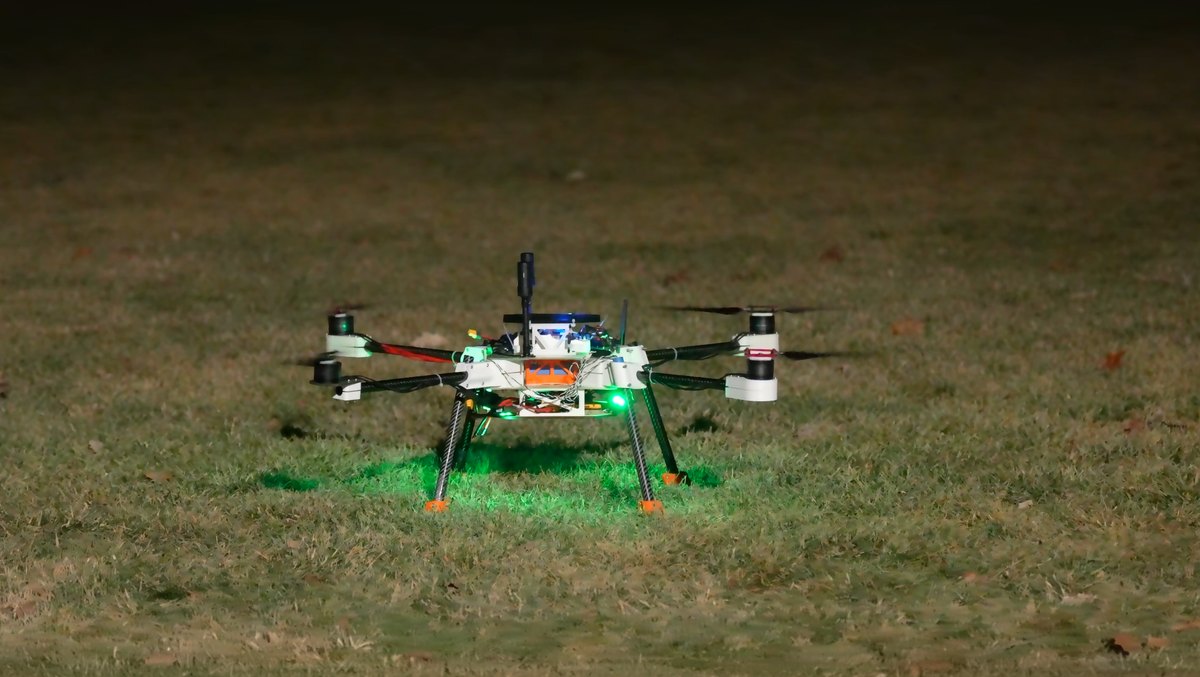
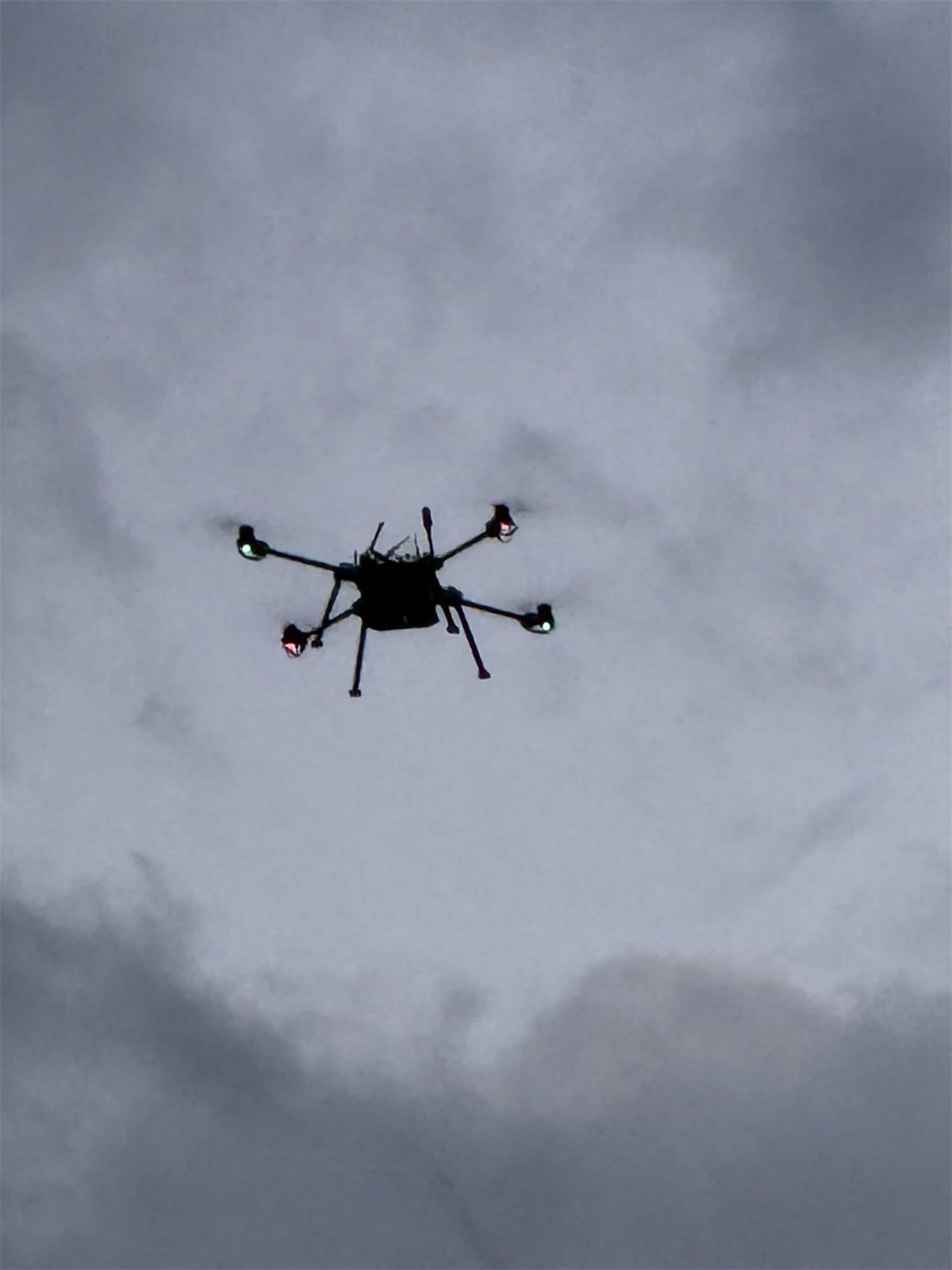
MEP operating during a night field test.
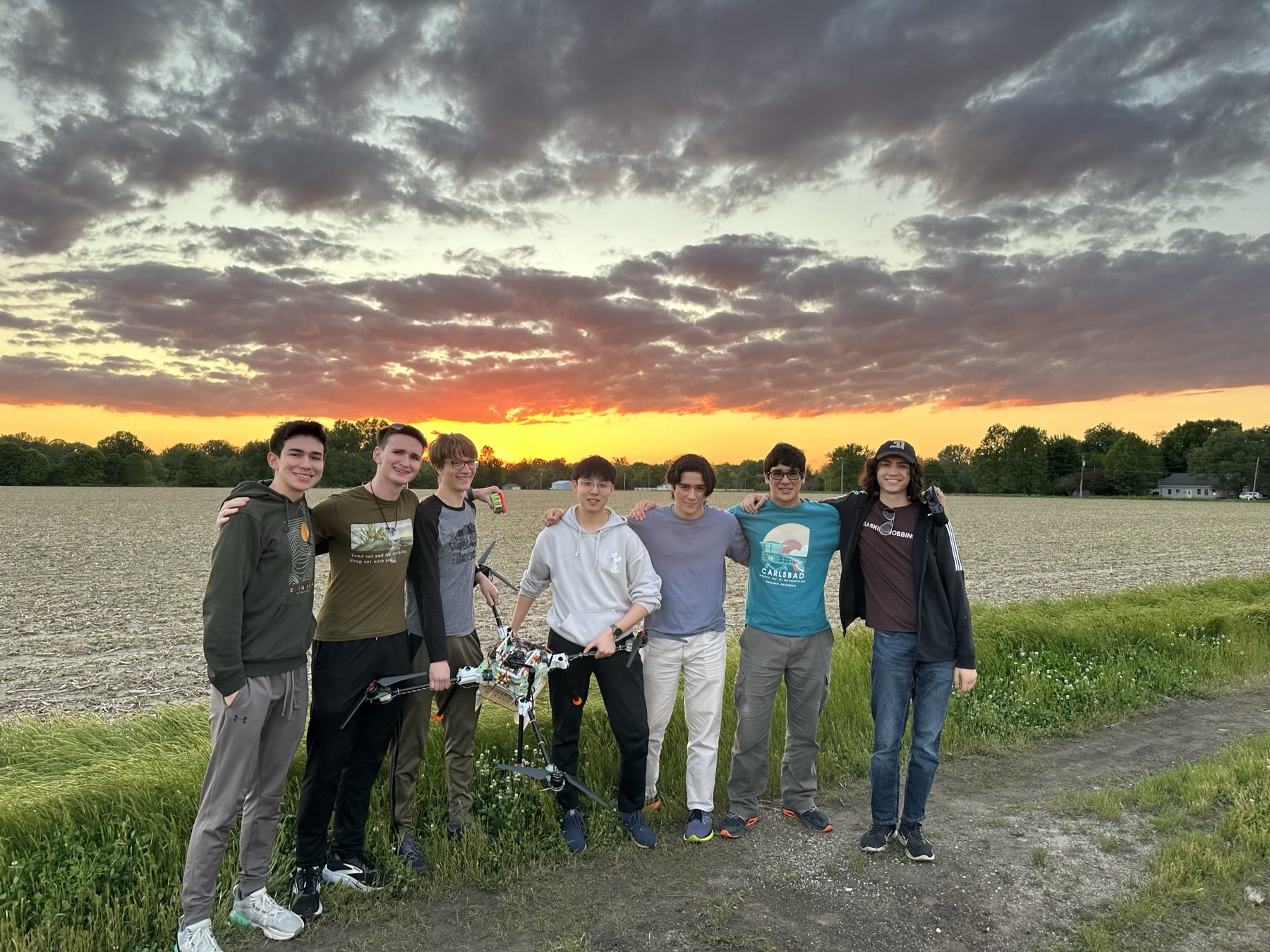
The field crew with MEP after a test.
MEP in hover during a subsystem flight test.
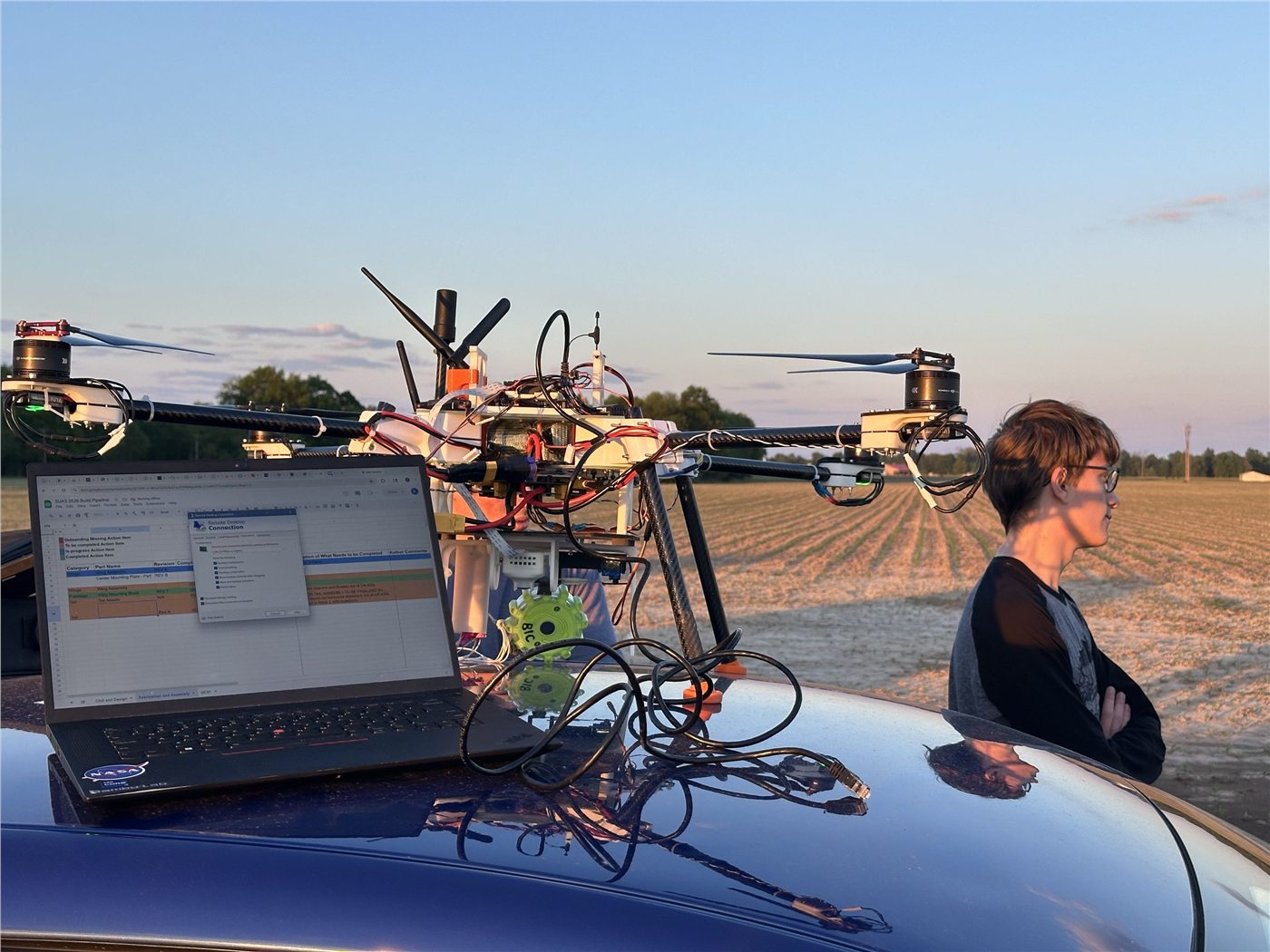
Aircraft and ground equipment prepared for a field integration check.
MEP2 autonomous takeoff and commanded payload-release test.
Software-in-the-loop and ground-station testing
We connected ArduPilot SITL, Gazebo, Mission Planner, and our mission scripts to rehearse connections, arming states, mode changes, waypoint handling, and mission logic. That let us find software problems before enabling the same behavior on a real aircraft.
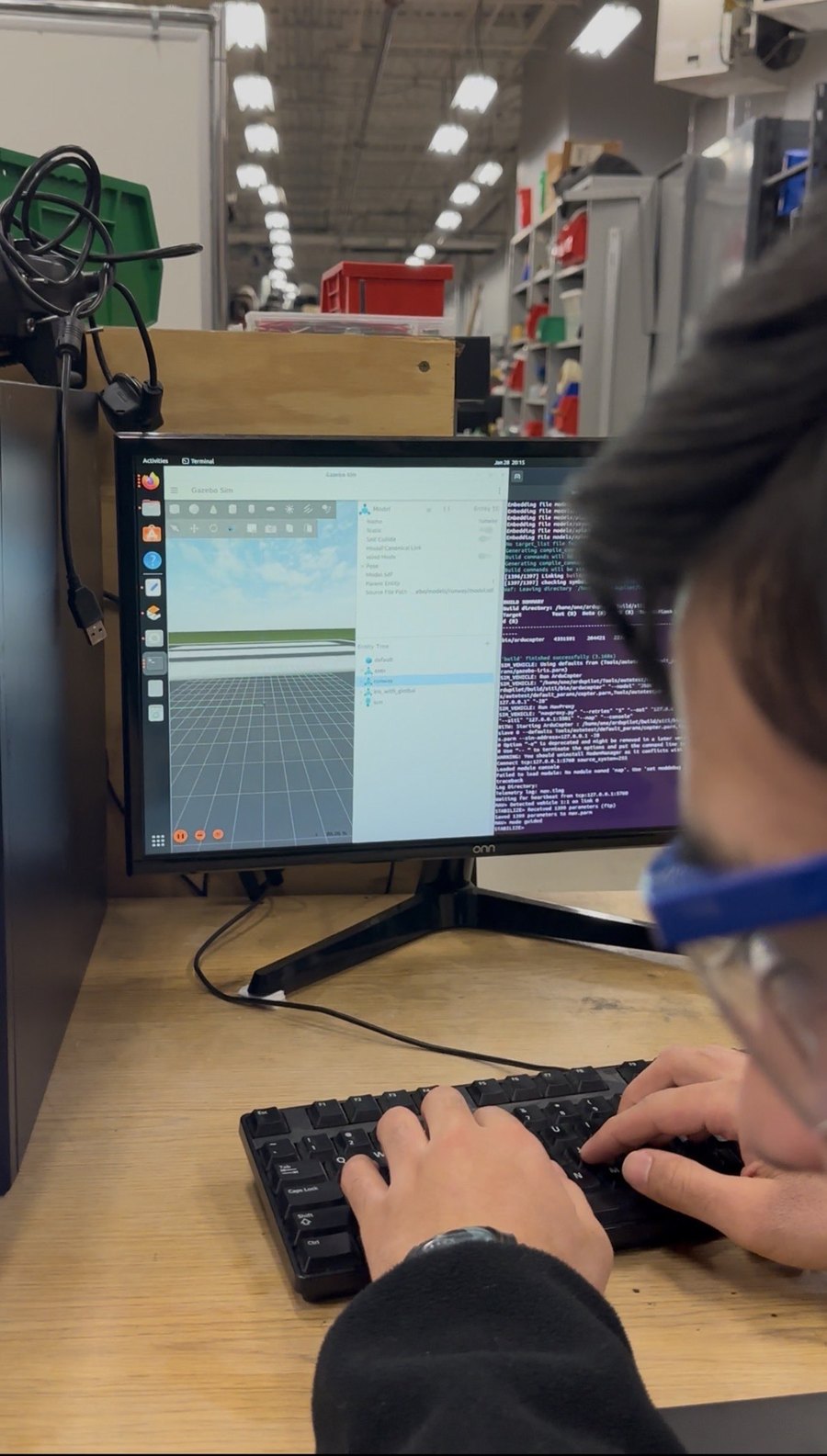
SITL and Mission Planner used together during a workshop test.
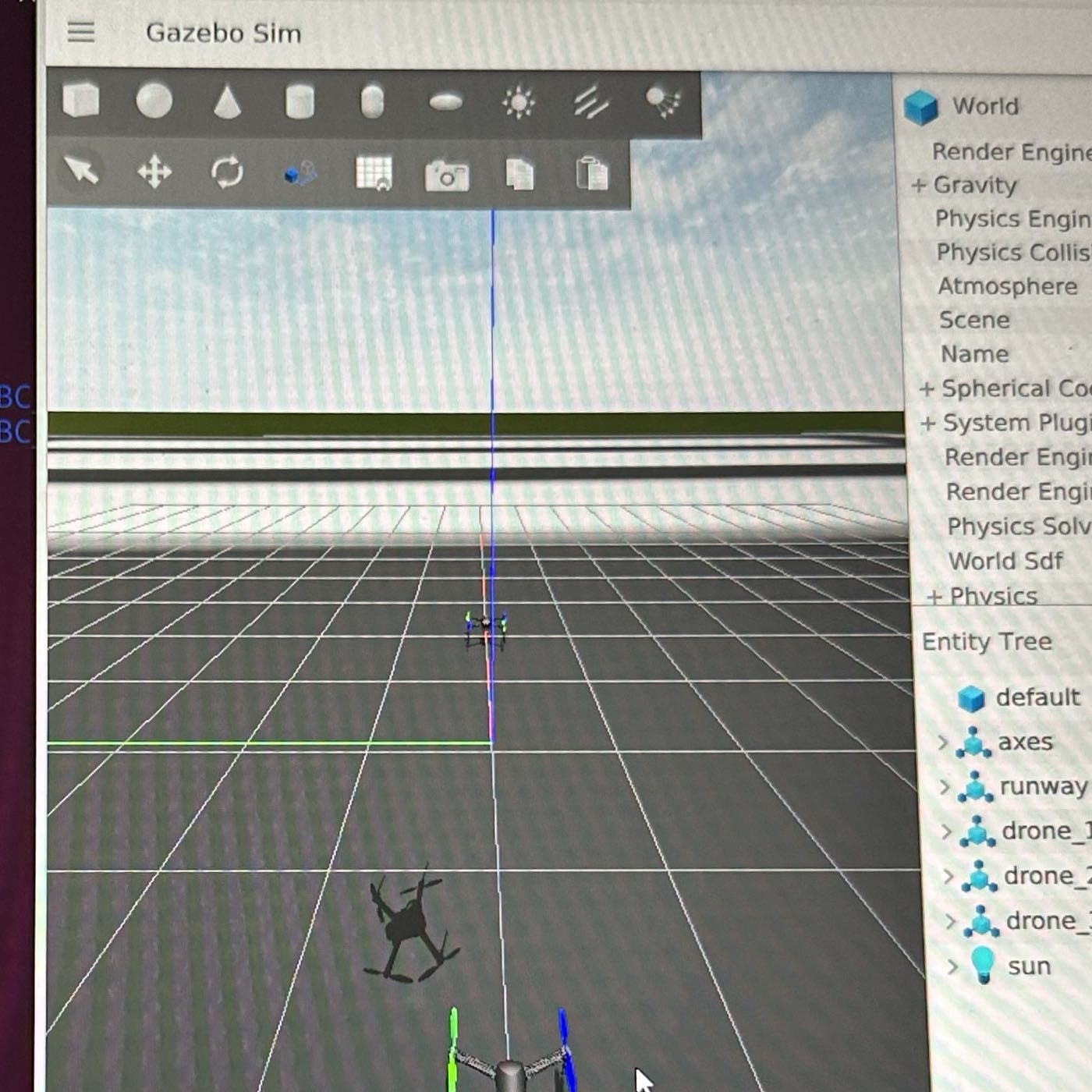
Gazebo simulation used to exercise mission and telemetry interfaces before flight.
A yaw problem grounded MeadowHawk
An early VTOL flight developed a steady clockwise yaw. The counter-clockwise motor pair ran much hotter, and the front-left motor was damaged. We grounded the aircraft and checked the logs, motor mapping, rotation directions, ESC setup, controller allocation, wiring, mounts, and structural stiffness.
The carbon lift structure remained H-shaped, but we changed ArduPilot from an H-frame allocation to an X-frame allocation and rechecked each motor's physical location and direction. We also installed a matched set of DJI lift motors, reinforced the arm and motor-pod structure, and repeated no-prop, restrained, hover, and temperature checks.
Follow-up checks
Restrained tests, short hovers, and assisted-mode flights no longer showed the persistent yaw or severe pairwise heating.
Accepted one-mile proof flight
MeadowHawk flew six approximately 900-foot waypoint laps for a total of more than one mile. This was a multirotor-only autonomous mission using four DJI 4216 KV310 lift motors, three parallel 6S batteries, and ArduPilot's X-frame control allocation. The aircraft finished without manual takeover, and competition reviewers accepted the proof.
Six autonomous waypoint laps completed
More than one statute mile flown
Required Mission Planner information displayed
No manual takeover needed to finish the mission
Proof-flight configuration and scope
The accepted mission consisted of six autonomous VTOL waypoint laps in multirotor mode.
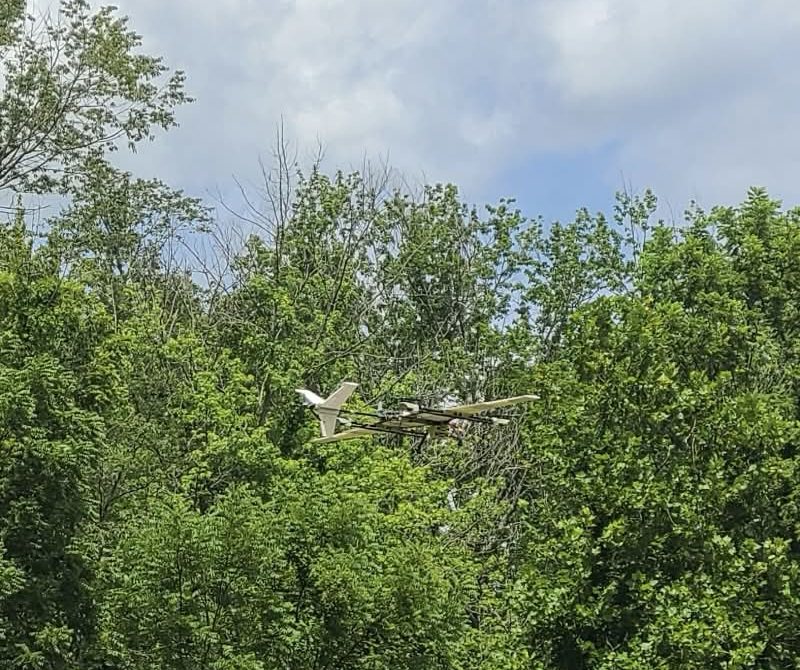
MeadowHawk airborne during VTOL testing.
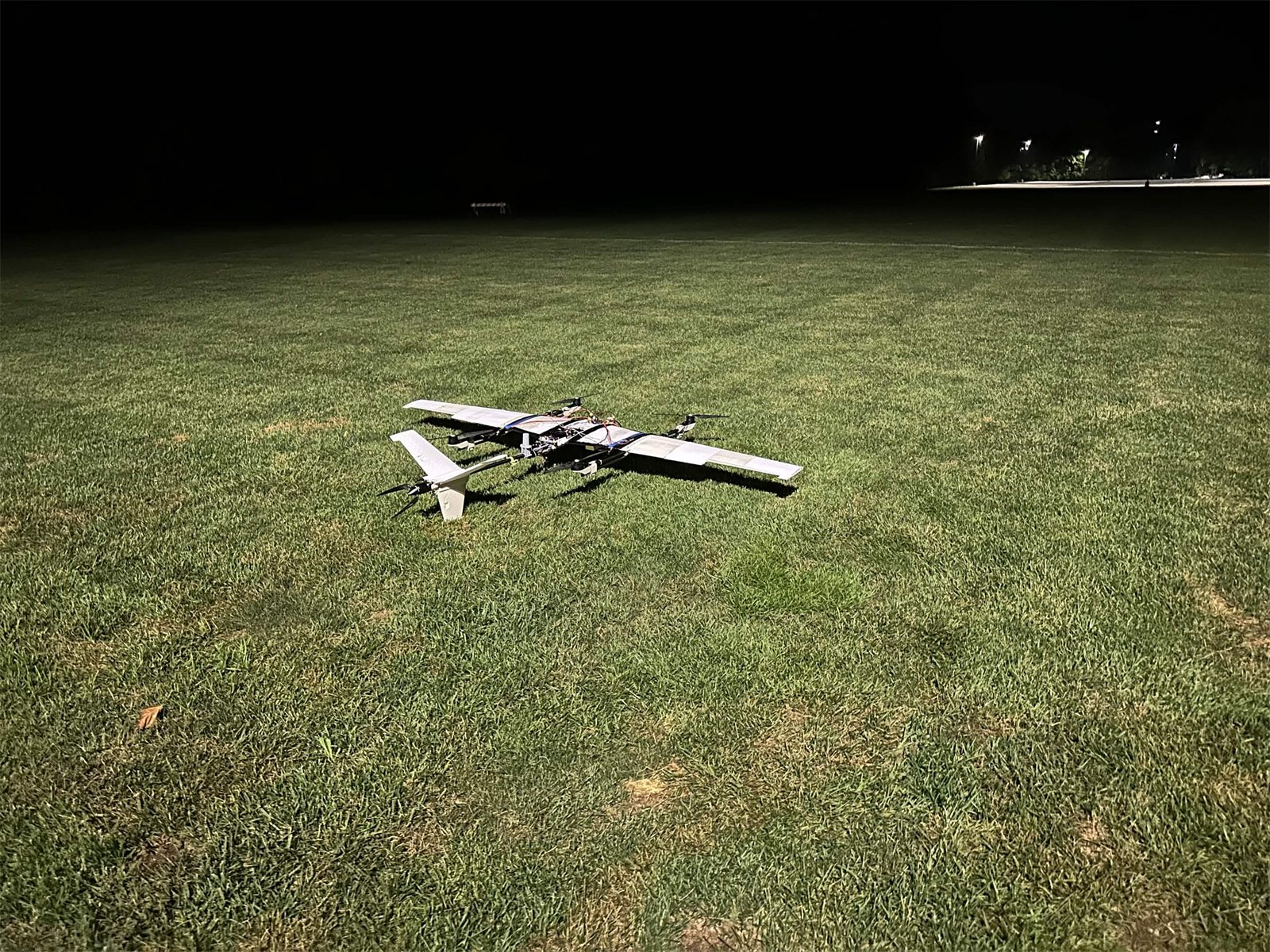
Night ground checks during the July test period.
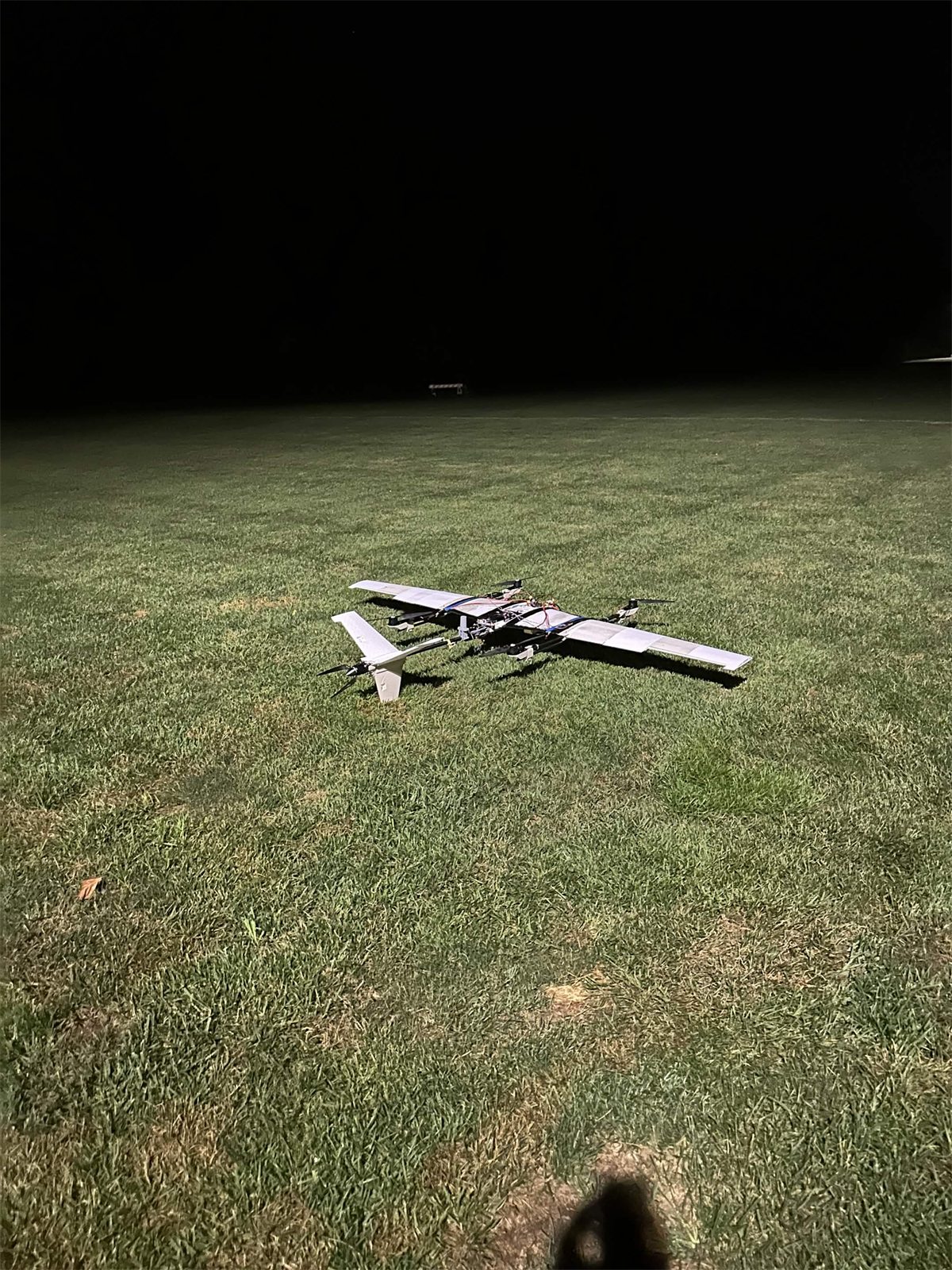
A second view of the aircraft during night field work.
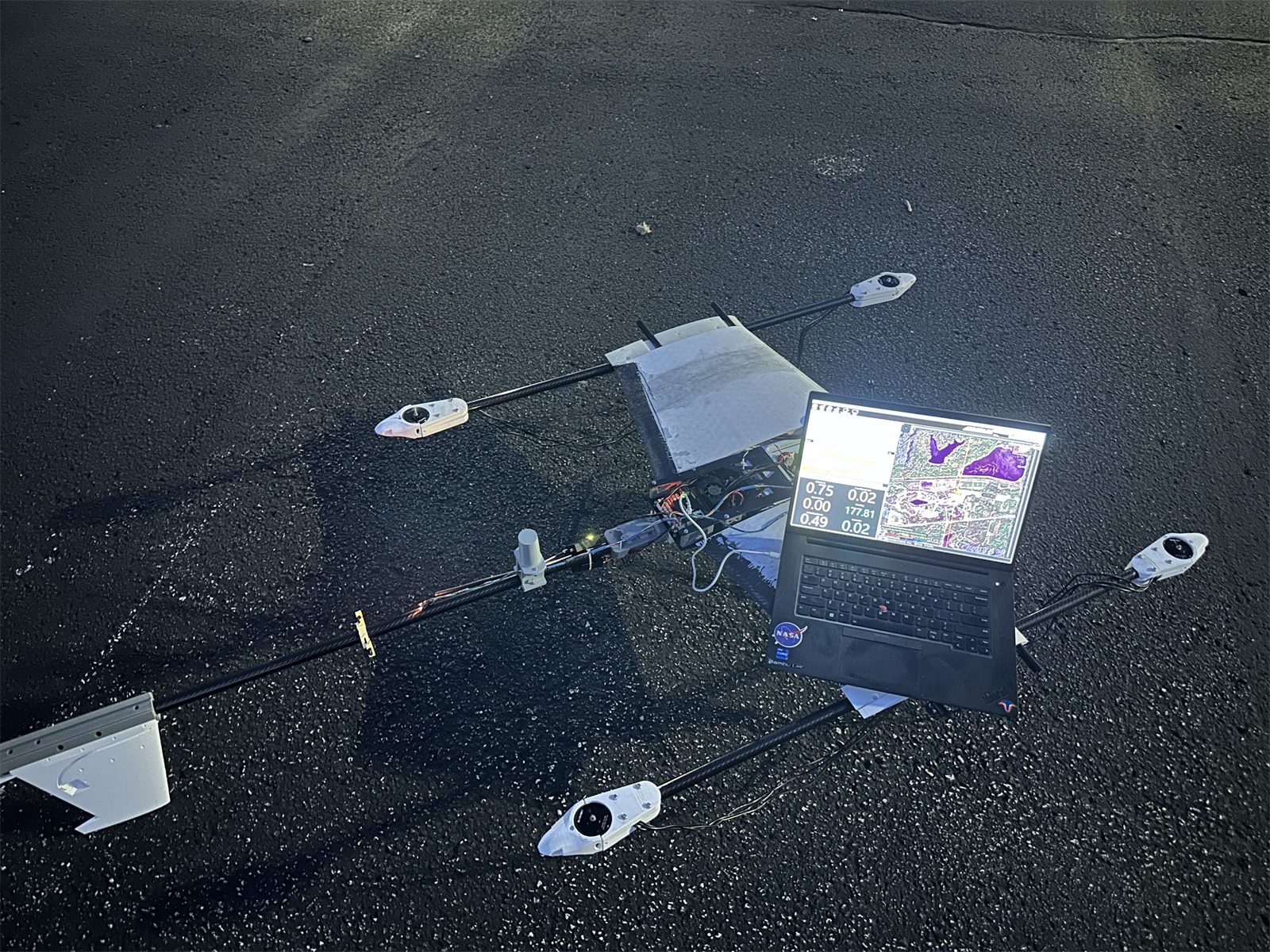
Calibration and telemetry checks with the aircraft on the ground.
The Technical Design Report organized follow-on testing into three areas.
Transition and cruise
Build from manual fixed-wing checks to forward transition, cruise tuning, return transition, and vertical landing.
Mission systems
Measure mapping coverage, live detection, geolocation error, and payload-delivery accuracy before joining them into one mission.
Reliability and operations
Repeat assembly, preflight, communications, failsafe, battery, transport, and full-mission rehearsals under field conditions.
Test records
Configuration-Controlled Test Records
For each major test, we track the date, objective, aircraft configuration, procedure, acceptance criteria, result, evidence, corrective action, and next step. That keeps a test result tied to the hardware and software that produced it.